
Finding Livingston Residents Safely
Begin by naming the connection you need to verify. A parcel card can identify an owner and a property location. A deed index can identify a person or business in a recorded transaction. A directory entry can show a household or telephone subscriber at a particular time. A voter result is a registration-status clue. Each record has a different date and meaning, so they should not be blended into a claim about where someone lives now.
For a current address question, the assessor and Register usually provide the strongest first trail. For a past household, start with a regional directory, then pair a street entry with a deed, census, obituary, or local-history source. Common names need more than one match. Keep the record year, custodian, and role shown by the record.
Record relationships are not interchangeable. An owner may be a trust, estate, corporation, or person receiving tax mail somewhere else. A historical directory can identify an occupant or telephone subscriber but not legal title. A court docket can identify a party and venue without showing a present address. Build a conclusion only after independent custodians support the same name, address, parcel, family relationship, or time period.
- Search a property record by owner name, property location, or block and lot.
- Use the parcel’s deed book and page or owner name in the recorded-instrument index.
- Check the state voter tool as a dated registration clue, using the county’s exact name spelling.
- For a historic household, transcribe the directory’s street number, name, telephone, and page before comparing another year.
- When a defined public record is not online, request that existing record from its custodian instead of a new list.
Livingston Records Offices
Livingston records are held by several custodians. The Township routes municipal files, local vital events, and records requests. Essex County maintains the land-record index and election channels. New Jersey agencies keep statewide court, archive, and vital-record systems. Using the correct office avoids a dead end and keeps a search focused on an existing record rather than an inferred household list.
Essex County Register
Hall of Records, Room 130
465 Martin Luther King Jr Blvd, Newark, NJ 07102
973-621-4960
Livingston Tax Assessor
Township assessment office
357 S Livingston Ave, Livingston, NJ
973-992-5000 ext. 5115
Land records and parcel fields are developed in the Livingston by-street directory; this office list is the route to the custodian behind each record.
The Township Clerk is also the local OPRA contact for municipal files. The Township’s government hub provides agendas, minutes, boards, ordinances, and notices that can document a dated civic connection. For local vital events, the Registrar maintains Township births, deaths, marriages, civil unions or partnerships, and burial permits. These routes are useful because a municipal record must be requested from the office that created or controls it.
Livingston Parcel Search Fields
The Township directs property users to the Essex County Property Assessment Search Hub. The reliable record keys are owner name, property location, block, lot, qualifier, and municipality. The fetched official route did not expose a stable live screen, so ZIP filtering should not be promised. A property location is the situs, or physical parcel address. The owner mailing address is only the destination for tax correspondence and can be different.
| Assessment field | What it can establish |
|---|---|
| Owner name | Recorded assessment owner, subject to trusts, estates, entities, and update timing. |
| Property location | The situs address used to locate the parcel. |
| Block, lot, qualifier | Parcel keys that link a tax card, map sheet, and deed search. |
| Deed book and page | A bridge from assessment history to the Register’s recorded instrument. |
| Sale and assessment history | Dated property information, not a live occupancy list. |
The official tax-board information page links to the assessment hub used for Livingston. The screenshot shows the county entry point, not a guarantee that every live search control is available without the external hub loading.
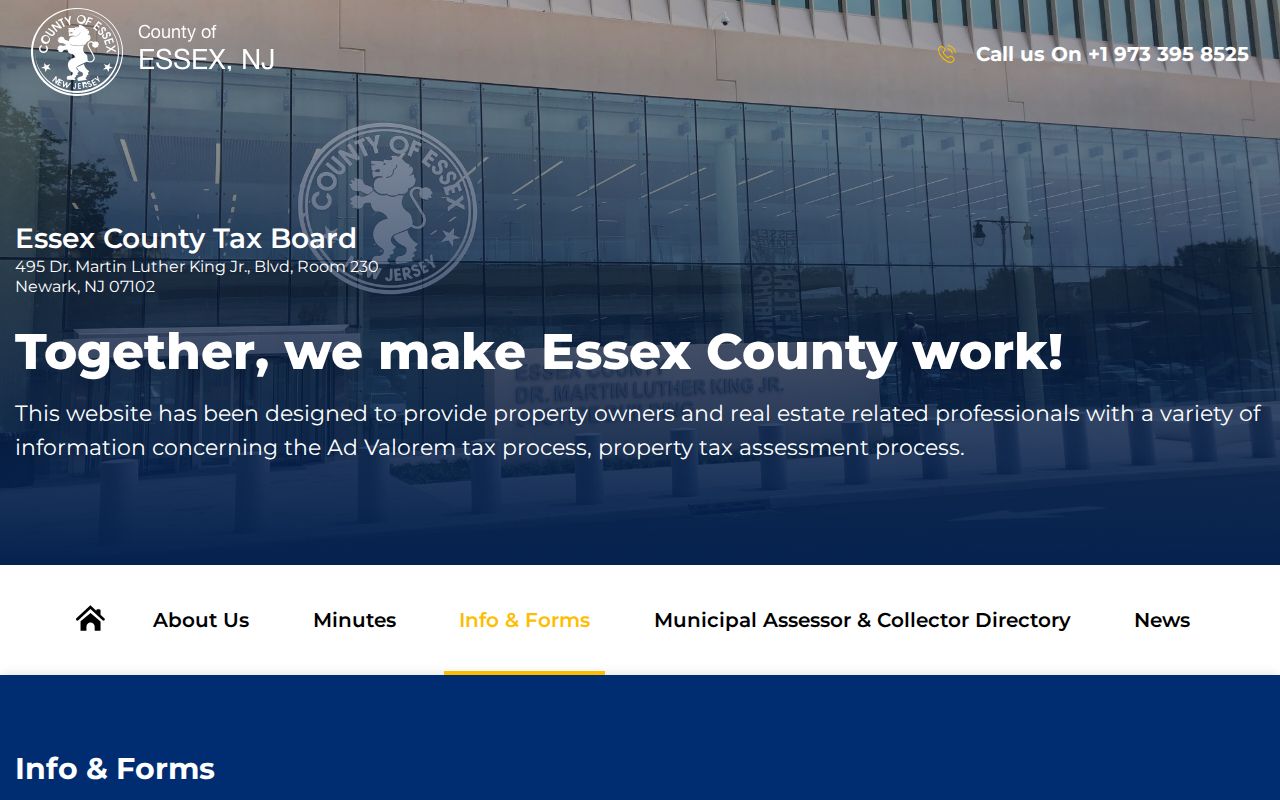
Use a card as an ownership and parcel lead. Confirm a recorded transaction in the Register before treating a sale detail as deed evidence.
Livingston’s tax-map page supplies a 2020 cover and numbered sheets. After locating the sheet, use block and lot rather than relying only on a street spelling. The Essex and New Jersey ArcGIS parcel item can help inspect parcel geometry and adjacent lot identifiers, but its live Livingston controls and full layer fields were not captured reliably. It supports parcel context, not a claim that a person occupies a mapped polygon.
Essex PRESS Deed Trail
The Essex Register’s PRESS index is the county’s public route for recorded deeds, mortgages, liens, releases, maps, and related instruments. Search by instrument number, book and page, municipality, block and lot, or last name and optional first name. In document mode, the From and To dates use a maximum 90-day span. The public portal states an online index cutoff of October 1, 1996, although county indexing and image-history statements describe older computer material differently.
That difference matters when a Livingston chain reaches an older transfer. Use the online entry as a lead, then ask the Hall of Records or State Archives for older books and images. A grantor is the person or entity conveying an interest. A grantee is the party receiving it. Those roles show a recorded relationship to land, not proof that either party occupied the address.
- Parcel
- A defined tax lot or tract, commonly identified by block and lot.
- Index
- A search aid that points to a record. It is not always the image or certified copy.
- Criss-cross directory
- An address-arranged directory that can lead from a house number to a dated household.
- Situs
- The physical property location, distinct from the owner’s mailing address.
Note: PRESS is a public index, but Register staff do not perform title searches for researchers.
For deeper history, the State Archives guide identifies Essex grantor and grantee indexes from 1688 through 1909 and surviving deed records from 1793 through 1901 on microfilm. A precise request should include the municipality, approximate date, party name, and, when known, block and lot or book and page. Keep legal descriptions and spouse, estate, or corporate roles in the chain because a name match alone can connect the wrong transaction.
New Jersey Voter Check
New Jersey links its registration check from the state election site. Name matching needs care: hyphens, spaces, changed surnames, middle initials, and nicknames can cause a non-match when they do not match the county record. A result is evidence of an election registration record, not a promise that a person currently lives at a particular Livingston address. An inactive or challenged registration can remain part of the election process before removal.
For a documented election-date snapshot, Essex County’s municipal guide lists voter-list copies at $0.25 per district. The request should identify the municipality, district, and relevant election date. Signatures, Social Security numbers, driver or non-driver IDs, marked ballots, and election-security material are not part of a public resident search.
The live state registration screen was JavaScript-dependent during research, so its exact field labels and result columns should not be guessed. Use the official state route for a status check and the Essex Board of Elections or County Clerk for a human election-record channel. Pair a registration clue with a dated parcel, recorded instrument, or directory entry. That approach respects both the limits of the public interface and the fact that election districts can change or cross a reader’s idea of a neighborhood.
Livingston Court Record Context
The NJ Civil Case Jacket permits a public party-name, docket, or judgment search for Civil Part, Special Civil Part, and Foreclosure matters. Its individual party search uses last name, first name, and an optional middle initial, then returns name, venue, docket number, caption, and initiation date. A CAPTCHA is part of the public search. A court match establishes a case relationship, not a current home address or a conclusion beyond the displayed record.
Older or closed files can require a clerk route. Rule 1:38 limits access to sealed, expunged, juvenile, victim, discovery, and other protected material. Livingston Municipal Court has a ticket or complaint-number path rather than a universal name search. Essex Criminal Records Room and the appropriate court clerk are the human fallback when the online portal does not expose a file.
Different court paths answer different questions. The statewide criminal portal, judgment and lien searches, Tax Court, municipal self-help route, and federal PACER system are separate systems. PACER’s inspected schedule states $0.10 per page with a $3 cap for most documents and a quarterly waiver when fees do not exceed $30. A docket can verify an event or relationship; it should never be treated as proof of a person’s address or an outcome beyond the court’s displayed disposition.
Livingston Current Record Sources
No current Livingston residents directory is maintained as one public book. Instead, use a source that matches the question. The municipal resource directory identifies organizations and public contacts, while the land index identifies recorded parties. Those are useful, but neither supplies a reliable list of every household. A person’s role should stay attached to the source that supplied it.
| Record source | Person or place connection | Custodian | Access route |
|---|---|---|---|
| Assessment card | Owner, situs, mailing address, block and lot | Livingston/Essex assessment system | Official hub, assessor, or defined request |
| PRESS deed index | Grantor, grantee, instrument, date, parcel bridge | Essex Register | Free public index; counter for older work |
| Registration check | Dated election-status clue | New Jersey/Essex election offices | State check or district-list request |
| Resource directory | Public organization or business contact | Township of Livingston | Search and category browse |
| Public meeting records | Dated civic role or appearance | Township Clerk | Government hub or defined request |
When the question shifts from a record role to one named person, the Livingston resident lookup workflow helps keep ownership, address, court, and historical evidence separate.
The Township’s searchable resource directory is an organization and business layer, not a private-member roster. Research observed category browsing, a name field, alphabetical browsing, and 109 listings with ten per page. Neighborhood Watch likewise offers a police liaison and meeting model, not participant names. When a source identifies a local organization, verify the contact with that organization and describe it as a public role or umbrella, not as evidence that every associated person resides in Livingston.
Livingston OPRA Request Details
New Jersey’s Open Public Records Act gives a route to existing government records, subject to exemptions. Livingston’s form asks for contact information, delivery method, maximum cost authorization, payment choice, and a precise description. It also asks about conviction, commercial-purpose, and legal-proceeding status. Useful delivery choices include pickup, mail, on-site inspection, fax, and email. Describe a permit summary, an address, a block and lot, department, and date range rather than asking the Township to create a broad list.
Livingston’s form quotes $0.05 for a letter-size page and $0.07 for a legal-size page, with material, postage, special-service, and possible deposit rules for other copies. A standard available-record response is generally seven business days; the local form identifies longer review for some commercial-purpose or Daniel’s Law-related requests. Ask for a segregated copy when only part of a record is protected.
OPRA does not require a government agency to answer a question, compile a new database, or reveal exempt details. The state’s central guidance directs a requester to the actual custodian. If a municipal permit summary is needed, identify the property address. If a record may have been retained or disposed under a schedule, the New Jersey Records Management Services route can help explain an empty portal. A carefully scoped request is both more useful and easier for a custodian to process.
Protecting Livingston Addresses
Public availability has limits. Daniel’s Law, N.J.S.A. 47:1B-1 et seq., protects the home addresses of covered current, former, and retired public-safety and judicial personnel and immediate family. The state’s Address Confidentiality Program provides qualifying participants a substitute legal address and mail-forwarding protections. These programs may affect records that otherwise appear in a parcel, court, or municipal search.
New Jersey’s consumer data privacy law, P.L.2023, c.266, took effect January 15, 2025. It gives consumers specified access, correction, deletion, and opt-out rights in covered contexts, while public-record and other statutory rules still control their own records. Keep source dates, minimize personal details, and route correction or suppression requests to the office that controls the record.
New Jersey License and Entity Checks
A professional license or business filing can confirm a public role without proving a Livingston home address. The state license verification page starts with a license category and then a person or business search mode. Capture the displayed license type, number, status, and dates rather than using a broad label. The results are current verification information, not a household register.
New Jersey’s professional verification page is the official entry point for board-specific searches.
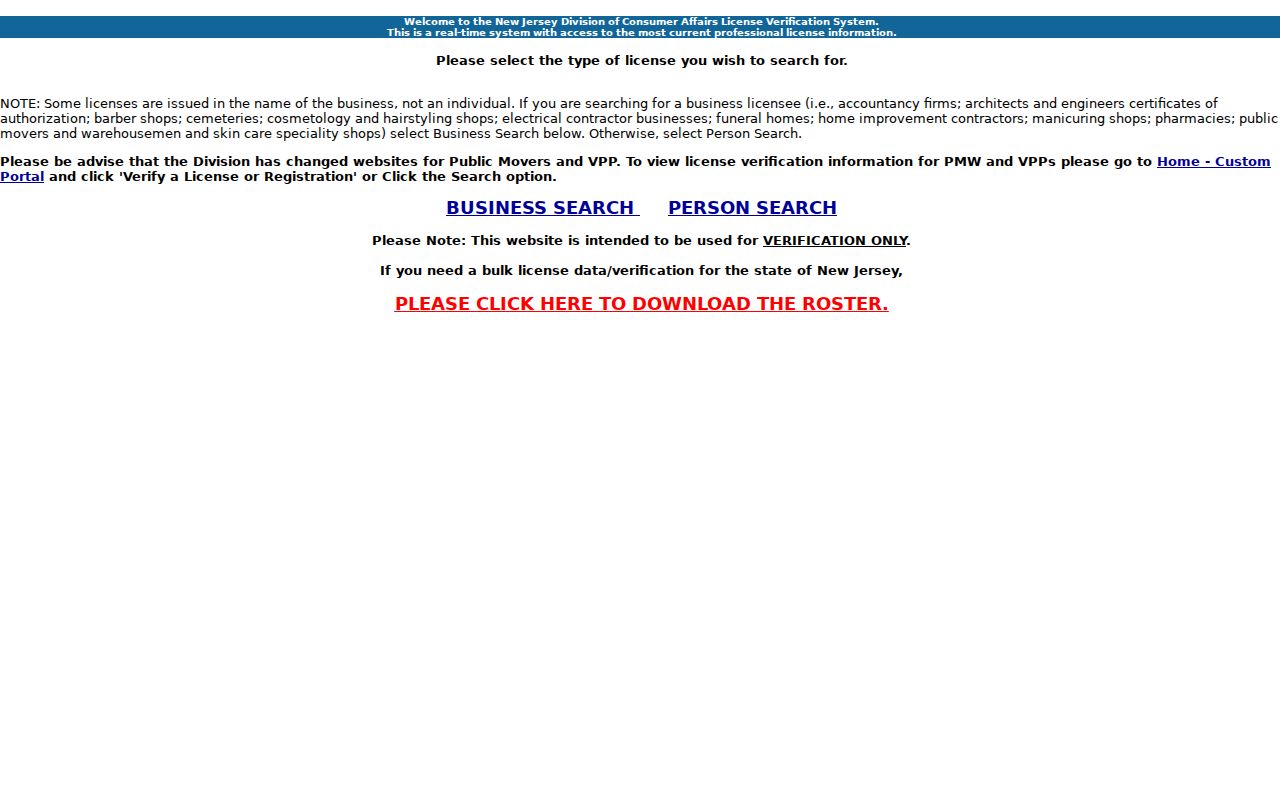
The category selector is a reminder that each licensing board can expose different fields and rules.
The state’s business-name route requires exact spacing and punctuation. A Business Registration Certificate form uses name control, taxpayer ID, business entity ID, or certificate number. An entity or trade-name record may document a dated business connection, but it should not be recast as a residential address.
The New Jersey business-name search explains its exact-name approach before a record request is made.
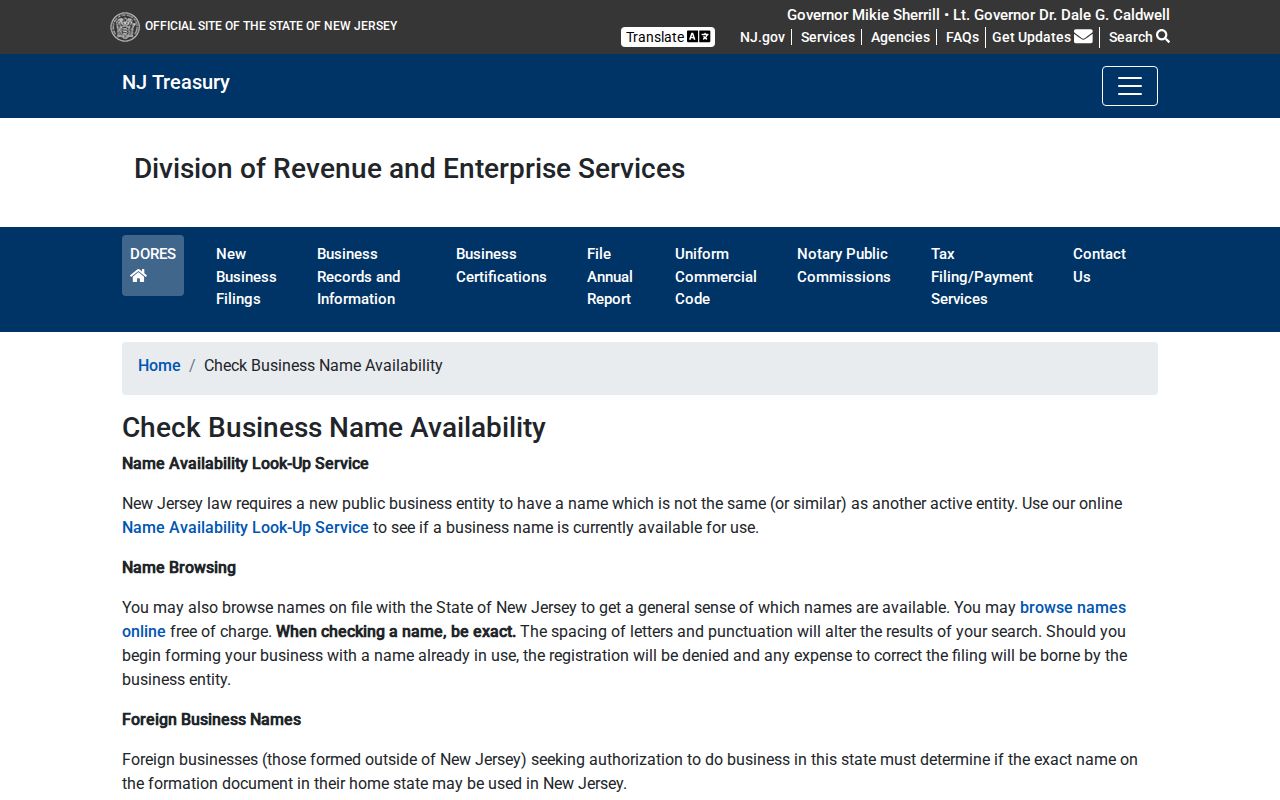
Use entity variants and then confirm status or a requested official copy through the issuing state office.
DORES records can include entity status, annual reports, trade or service marks, UCC information, and certificate requests. A business principal, licensee, debtor, or secured party has a role in the document, not a presumed home address. New Jersey’s professional-verification data is described as current or real-time on its landing page, while individual board forms vary. Preserve the license number, status, and displayed dates rather than using a vague label such as “licensed resident.”
Livingston Status Tools Need Context
Some official systems answer narrow safety or ownership questions. New Jersey’s unclaimed-property portal offers free name searching, claim filing, document upload, and status tools for owners and legal heirs. An older address may help a claimant establish a connection, but a listing is not proof that the person is at that address now.
The state unclaimed-property portal is free to search and makes its claim process available online.
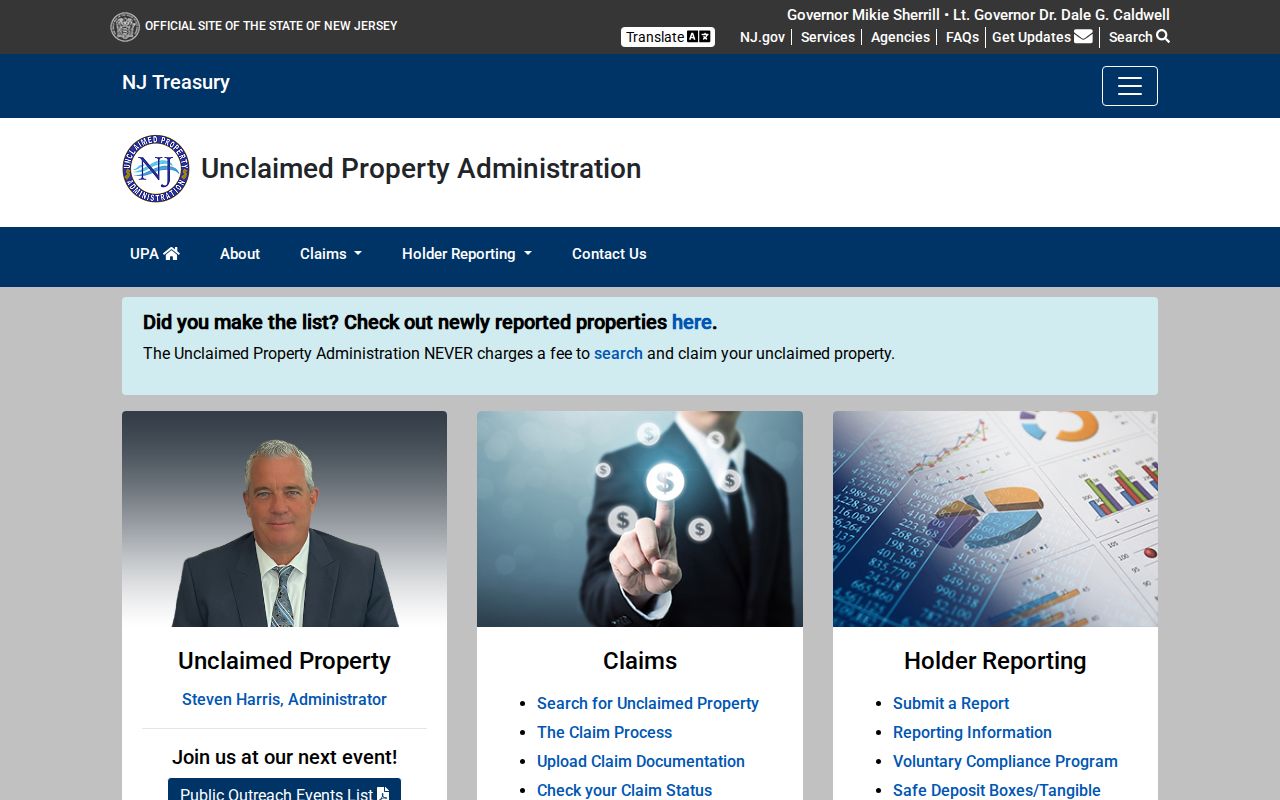
Only the owner or a legal heir should advance a claim and provide the documents the state requests.
The official sex-offender registry is another narrow, legally defined tool. It is not a general criminal-history or resident directory, and the state’s live search controls were not captured reliably in the research. Read its notice and rely only on the information displayed by the official service.
The New Jersey State Police registry entry page is the appropriate starting point for that limited status search.
Registry inclusion has its own legal definition and should never be used to make an unsupported statement about a person or a household.
New Jersey Department of Corrections information concerns state custody, while Essex County’s Sheriff FAQ directs custody questions to the correctional facility by telephone and does not provide a public county jail roster. The state’s VINE route is a confidential notification service, not a public people directory. These systems have safety-sensitive purposes and should be used only as their official notices and access rules allow.
Archives Beyond Livingston Portals
When the online route stops, the New Jersey State Archives is the statewide fallback for historical vital, census, naturalization, probate, military, court, and county land material. It also holds the Essex deed indexes that reach back before the modern PRESS window. The Archives describes a genuine gap: Deed Book A, covering 1728 to 1793, was destroyed by fire, and the surviving deed run begins with Book B in 1793. A missing early link should be labeled as a gap, not filled by guesswork.
The State Archives genealogical collections search points researchers toward searchable collections and request paths.
Pair an archive result with its collection name, page or reel, and record date. That is the safest way to distinguish a historic family clue from a current Livingston record.
Historic Livingston Directory Evidence
Livingston appears inside broader Price & Lee volumes rather than in a guaranteed annual Livingston-only book. The State Library inventory identifies a 1916 regional directory; selected 1934, 1936, 1938, 1940, 1942, 1948, 1950, and 1952 issues; and West Orange volumes including Livingston for selected 1964 through 1970 years. Rare books, microfilm, and microfiche have different access points at the State Library, and the Livingston Local History Room is appointment-only.
A digitized 1950 street page shows house numbers, occupant names, spouse references, occupation abbreviations, telephone exchanges, vacancies, rear-unit marks, and street-boundary cues such as “fr,” “begins,” and “ends.” That is dated occupancy evidence. It is not a modern ZIP, age record, or title document. The detailed collection and entry-reading method belongs in the Livingston city directories.