
Livingston Resident Lookup Records Compared
One name can appear in several public systems for very different reasons. In Livingston, the most useful first distinction is between ownership, a dated registration, a court relationship, and a vital event. The Essex County Property Assessment Search Hub can tie a recorded owner to a parcel, while the Essex Register PRESS index can identify a person named in a recorded instrument. Neither record by itself proves that a person currently lives at the address.
| Record | What it can confirm | Livingston route | Access |
|---|---|---|---|
| Assessment card | Recorded owner, situs, mailing address, block and lot | Essex assessment hub | Official online route; live field display varies |
| Recorded instrument | Party to a deed, mortgage, lien, or other filing | Essex Register PRESS | Free public index; image availability varies |
| Voter record | Election-jurisdiction registration clue | NJ registration check or Essex district list | Public channel with protected fields excluded |
| Court jacket | Case relationship, venue, docket, and date | NJ Civil Case Jacket | Free public search; some files stay outside the interface |
| Vital event | Birth, death, marriage, or related event | Livingston registrar, NJ DOH, or State Archives | Eligibility and historical thresholds apply |
Choose the first record from the question you need answered. A parcel question starts with an address or owner name. A dated household question may need the library archive. A court case begins with the party name and must remain a case result, not a residence claim.
Set Up a Livingston Name Check
Write down the full name exactly as it appears, any alternate spelling, middle initial, approximate year, and a known Livingston street or organization. Do not add a birth date, phone number, driver identifier, or a protected address to your notes. A common surname needs more than one point of agreement. The safest combination is a name plus a street, middle initial, spouse, parcel, or dated event from a different custodian.
Keep a simple record-date column as you search. The New Jersey registration check is a current-or-recent election clue, not a guarantee that a person is still at an address. Hyphens, spaces, changed surnames, nicknames, and middle initials can cause a non-match, so try the spelling held by the county. Mark an inactive or conflicting result instead of forcing two records together.
Confirm a Livingston Resident Record Through Parcels
The local Tax Assessor directs property researchers to the Essex assessment route. Search by owner name, property location, block, lot, or qualifier when the live hub exposes those modes. A property location is the situs, meaning the physical parcel. The owner mailing address is where tax correspondence goes. Those fields can be different, especially for a trust, estate, company, or owner who receives mail elsewhere.
| Owner information | Name and mailing street, city, state, and ZIP on the assessment card. |
|---|---|
| Parcel keys | Municipality, block, lot, qualifier, property location, map page, and old block or lot. |
| Deed bridge | Sale date, deed book, and deed page can direct the next PRESS search. |
| Physical context | Property class, building description, year built, area, acreage, and assessment history where shown. |
Use the parcel card to form a narrow record statement such as “recorded owner associated with this parcel on the card date.” Then search PRESS by Livingston plus block and lot, or by the person’s name. The PRESS public portal lists an online index from October 1, 1996 and limits a document-date span to 90 days. Older computer-index and image statements do not perfectly match the current portal, so the Hall of Records or State Archives is the verification route for older material.
Note: A parcel card can connect a person to ownership evidence, but it does not identify every household member or prove current occupancy.
Search Livingston Resident Records in Civil Jackets
The NJ Civil Case Jacket is a statewide court tool for Civil Part, Special Civil Part, and Foreclosure cases. In party-name mode, an individual search requires last name and first name; middle initial is optional. It also offers docket-number and judgment paths, has an individual-or-business choice, and requires a CAPTCHA. Search a Livingston name only to identify a court record relationship, not to label a current resident.
| Case Jacket field | How it works | Why it helps identify a match |
|---|---|---|
| Case type | Choose Civil Part, Special Civil Part, or Foreclosure | Keeps the result set tied to the selected public path |
| Party name | Choose Individual, enter last and first name, add MI if known | Middle initials can separate similar names |
| Docket or judgment | Use the dedicated tab when a case number or judgment lead is known | Connects a prior record to a specific case path |
| Result controls | Use pagination, then retain the displayed venue and initiation date | Helps distinguish cases bearing the same party name |
See the Civil Case Jacket public interface before submitting a party query.
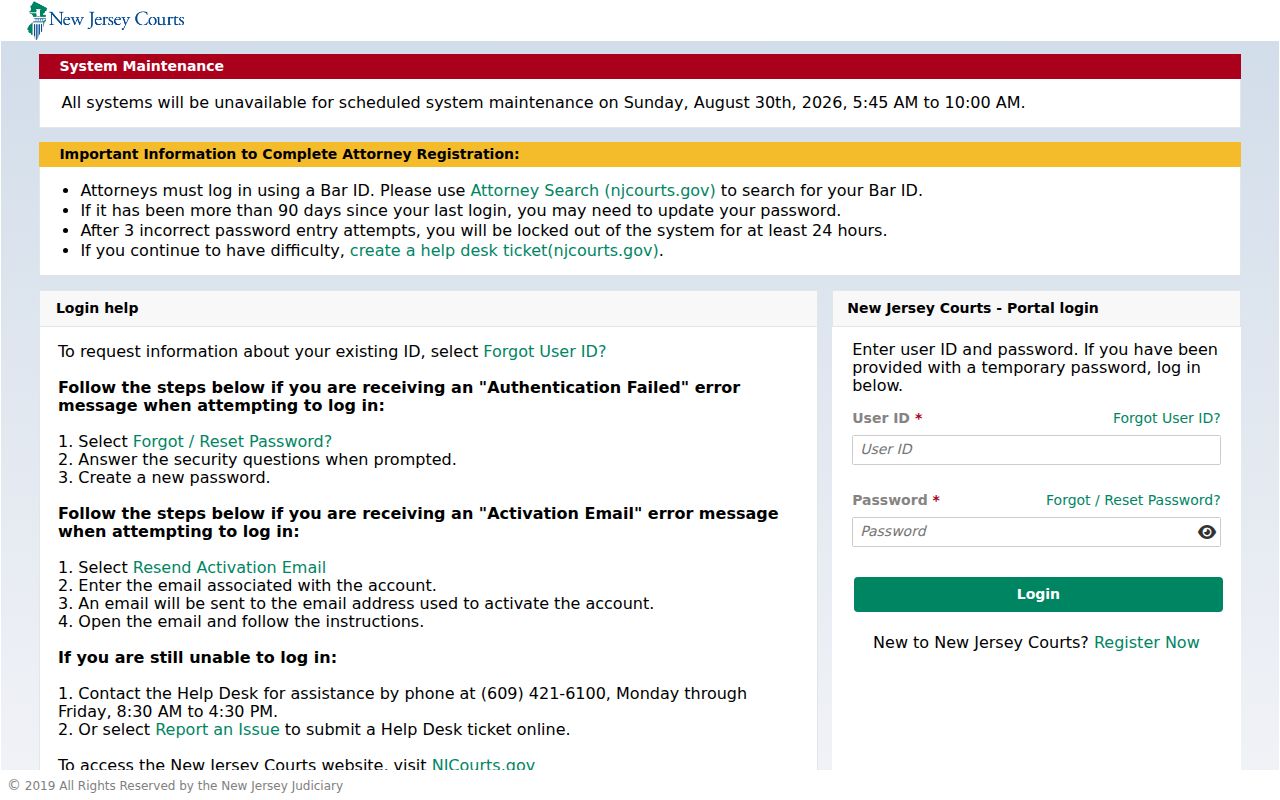
The interface separates party, docket, and judgment routes, which is useful when a name search produces several Livingston-area results.
Read Livingston Court Results Precisely
A Civil Case Jacket result displays a name, venue, docket number, case caption, and case initiation date. Party role, disposition, attorneys, proceedings, and judgments can depend on the case. A docket is the court’s identifying number for a case. It lets you request or discuss one file without confusing it with another matter involving a similar name.
- Name: the party text shown by the court, which may not include every variant.
- Venue: the court location associated with the case.
- Docket number: the case identifier used for the next court inquiry.
- Case caption: the court’s name for the dispute or proceeding.
- Initiation date: when the displayed case began, not when someone lived somewhere.
Electronic jackets do not supply a free full-file download, and they exclude some older paper filings, non-eCourts documents, discovery, and protected material. For an older or closed file, follow the New Jersey court records and copies guidance and provide the county, approximate year, parties, and requested document. Essex Criminal Records Room and Livingston Municipal Court are separate human fallbacks; municipal access usually requires a ticket or complaint number rather than a broad name query.
Use Livingston Voter and Vital Clues
Election records and vital records are both tightly scoped evidence. The state registration screen expects the spelling held in county data, and an address can be questioned or later become inactive. Essex County can provide an existing voter list by district, with the 2025 county guide listing a cost of $0.25 per district. Signatures, Social Security numbers, driver identifiers, marked ballots, and election-security information are not part of a casual resident search.
For an event record, use New Jersey Vital Statistics or the Livingston registrar. Current certificates have relationship and identification rules. For genealogy, the state uses thresholds for a deceased person and a birth over 80 years, a marriage over 50 years, or a death over 40 years. The State Archives, local newspaper notices, and the appointment-only Livingston Local History Room are useful fallback channels for older identity work, but a notice is not a certified record.
Review the New Jersey voter registration lookup as a dated status route.
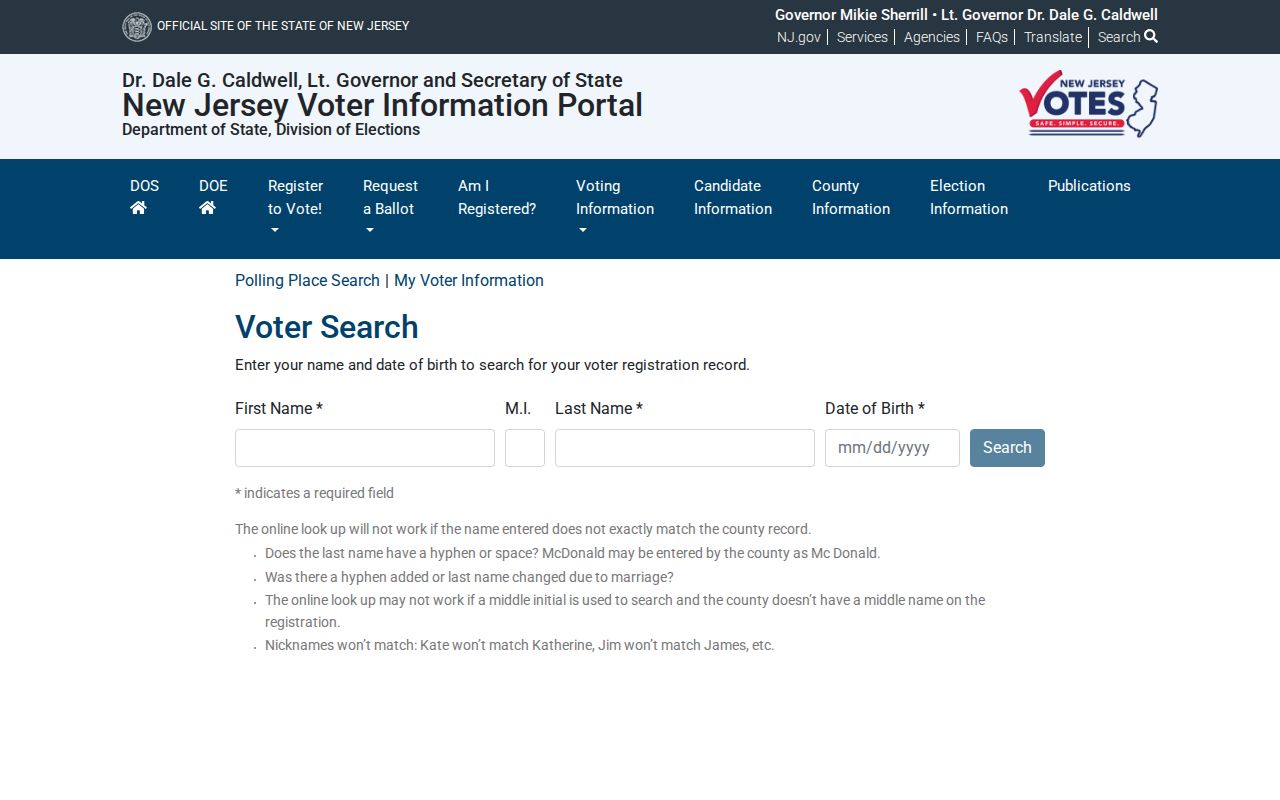
The screenshot shows the official lookup entry point, but its JavaScript-driven live field labels were not reliably available during research, so do not assume an unverified field option.
Corroborate a Livingston Resident Lookup
Professional and business filings can settle a role or date without becoming address proof. The New Jersey license verification service directs users to choose a license type and then a person or business search. It reports current license information, not a bulk roster. Capture a license number, status, effective dates, and a public business address only when the record displays them.
For a historical name, the Livingston Local History Archive includes newspapers, publications, photographs, scrapbooks, and yearbooks, while the library room is by appointment. A dated directory or obituary can supply a household or family lead. To trace that older household through directory volumes rather than recreating the collection research here, use the Livingston city directories.
Keep the conclusion narrow: licensee, recorded party, directory subscriber, voter, or event subject. Those labels respect what the custodian actually published and make a future correction easier.
Note: A historical directory entry and a modern owner record can support an identity trail, but they represent different dates and relationships.
Livingston Resident Lookup Privacy Limits
New Jersey’s Open Public Records Act, N.J.S.A. 47:1A-1 et seq., gives access to existing government records subject to exemptions. It does not require an office to create an all-residents list. A focused request names the record type, date range, department, address, block and lot, or file format. If part of a record is exempt, ask the custodian whether a segregated copy can be released.
Daniel’s Law, N.J.S.A. 47:1B-1 et seq., can suppress protected home addresses for covered people and immediate family. The Address Confidentiality Program provides a substitute address for qualifying participants. Court sealing, expungement, juvenile and victim protections also limit public results. Motor-vehicle records are outside this workflow because New Jersey’s DPPA rules restrict personal motor-vehicle information.
When Livingston Records Need a Custodian
Online portals have clear gaps. PRESS shows an online index from October 1, 1996, while older Essex index and image history needs a Hall of Records or Archives check. Court staff can explain what is electronically available but do not create a person list. A vital request needs the correct event, eligibility, and form. Municipal material such as a permit summary is requested by a defined address and record type, not as a broad search for every person linked to a street.
Use the office that holds the record: the Essex Register for land instruments and certified copies, the County Clerk or Board of Elections for an existing district file, the court for a docket or copy request, the registrar for an event certificate, and the Livingston clerk for a defined municipal record. The local OPRA form supports email, mail, inspection, fax, or pickup delivery choices. A precise request produces a more useful answer and protects people who are not actually connected to the record.